
Multiculturalism vs Assimilation
Has multiculturalism gone too far or not far enough?

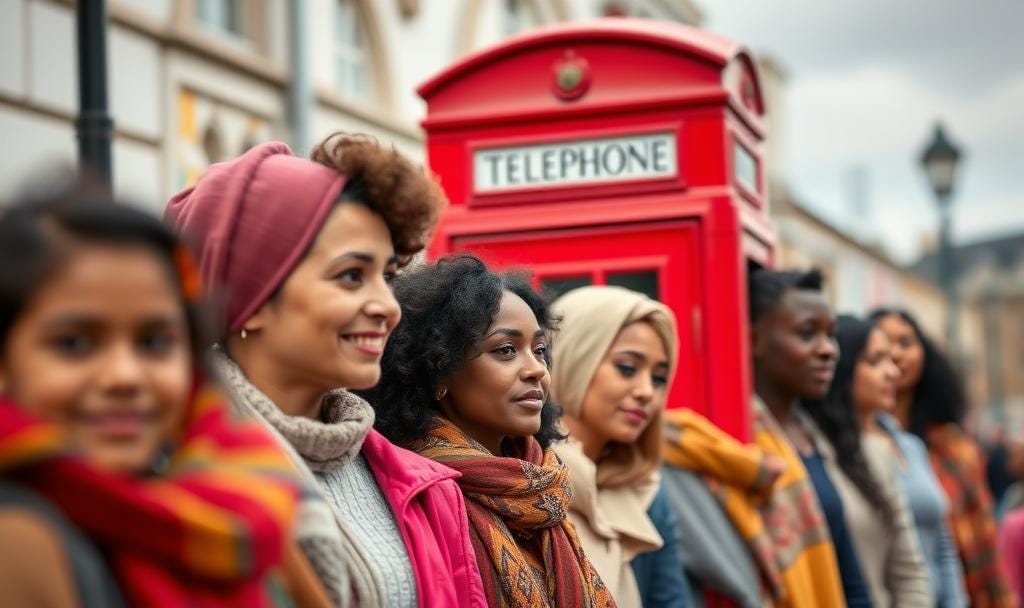
In this new episode of The Flip Side, The Equiano Project hosted a debate on multiculturalism versus assimilation, exploring what it means to belong in contemporary Britain.
Chaired by Ada Akpala, the discussion brought together two engaging thinkers, Tariq Modood and Alka Sehgal Cuthbert, to examine the tensions between identity, integration, and national values.
Tariq Modood: Advocated for Multicultural Nationalism
Tariq Modood opened by stressing that multiculturalism should be understood as an extension of equal citizenship. He argued that merely granting equal legal rights isn't enough if social and cultural inequalities persist, particularly in how minority groups are represented, treated, or erased from the public sphere.
He advocated for what he called "multicultural nationalism" — a vision of British identity that incorporates multiple racial, ethnic, and religious identities without forcing individuals to choose between being, for example, Black or British, Muslim or British.
For Modood, embracing various cultural identities in public life, whether through school curricula, media representation, or national symbols, is not only a recognition of Britain’s diversity but a way to foster deeper belonging.
Alka Sehgal Cuthbert: Cautioned Against Cultural Fragmentation
Alka Sehgal Cuthbert took a more sceptical view. She criticised both multiculturalism and assimilation for assuming static cultural categories. She preferred "integration" as a more open-ended, dynamic model of belonging that allows for cultural give-and-take rather than cultural silos.
Cuthbert argued that the core danger of multiculturalism today is not its celebration of diversity, but how culture itself has become politicised, replacing class-based politics and eroding the foundation of democratic life. For her, identity politics, including multiculturalism, has fragmented the nation by turning personal identity into a site of grievance and state mediation, often creating communal tensions rather than resolving them.
She also raised concerns that multiculturalism has, in some contexts, been used to stigmatise the “white majority”, making the concept of national belonging fragile. Integration, she insisted, must begin with the shared values of the majority, values that are themselves under strain from political disaffection and elite disconnection.
One of the most intense parts of the discussion emerged when they tackled whether individuals should be expected to temporarily set aside aspects of their identity, particularly in professional or civic settings, for the sake of a shared identity.
Tariq responded that while identities can be fluid and contextual, some are consistently salient, particularly for groups that have historically faced marginalisation. He stressed that recognising these identities is essential for achieving true equality and inclusion. Suppressing them in public spaces often perpetuates marginalisation rather than encouraging cohesion.
Alka cited her own experience as an English teacher who saw her professional role as more defining than any ethnic label. She criticised current trends that pressure people to see themselves primarily through a racial or cultural lens.
Is Multiculturalism Still Necessary?
Interestingly, both participants agreed on one key point: Britain has made substantial progress. Ethnic minorities, particularly South Asians and black Britons, have achieved significant educational and professional success, and overt racism has declined.
But Cuthbert argued that the continued emphasis on identity risks perpetuating division even as many structural battles have already been won. Modood on the other hand, countered that multiculturalism’s job is not over. He emphasised that inclusion isn't only about rights or representation but about reimagining Britishness itself as something that is co-created by all its citizens, regardless of background.
Whether one agrees more with Modood’s optimistic vision of a multicultural nation or Cuthbert’s caution about cultural overreach, the debate made clear that Britain is in the middle of an identity reckoning.
The debate is available to watch on YouTube below.
Watch the full uncut debate below. Click HERE to access it.
The Equiano Project is kept going by donations, large and small. Whatever the amount, we would greatly appreciate your contribution.
Would the USA’s gun culture be welcome in the UK? What about Spain’s bullfighting culture, or their afternoon siesta? Or France’s relaxed attitude to infidelity? Then there’s China’s more exotic cuisines? FGM? The banning of homosexuality in some countries? And last but not least, being allowed to run over a small dog in Germany?
To assimilate there will have to be compromises BUT not to the detriment to the host nation. The Hijab is a beautiful, elegant garment that EVERYONE should be able to wear, without being accused of cultural appropriation. The burka, niqab and any other face covering should not be allowed in a non-pandemic society, for the sake of security and communication. The problem any country has is when immigrants are so dogmatic they refuse to cherry-pick the compatible bits and discard the others. So, to summarise, I’m all for banning English Breakfasts in Spain’s Costa del Sol… but replaced with maybe a tapas version? 🙏🏼
When you immigrate you can either signal to the host population that you want to be part of the culture, to belong, to participate in public life, or you can make it clear you're just there for the benefits and you're going to go on living in exactly the same way you always have in your home country and if they don't like it maybe they should change to suit you better.